
Table of Contents
New Year’s Eve 2027 lands on a Friday. That one line on the calendar shapes every recommendation below. A Friday 31 December stacks into a long weekend across most of Europe and North America, which pulls demand forward and erases the usual last-minute bargains. So this is not a ranking of the best parties. It is a map of how fast the thing beside the party disappears.
Two kinds of city are in play. Some have a single ticketed point with a hard capacity cap, and those tickets can go in hours. Others are free to attend, so the pressure slides sideways onto hotel rooms and dinner reservations. Both can leave you standing outside at 11 p.m. if you start late.
Why a Friday New Year’s Eve changes the booking window
Most travelers book the party first and the flight second. For 2027 I would flip that order, with one caveat that catches people out every year.
The flight is the real constraint. Airlines typically open their schedules about 330 days before departure, so late December 2027 fares will not even appear until roughly February 2027. Until then there is nothing to buy on the air side. Hotels and event tickets, by contrast, go on sale whenever the operator decides, which is why they get reserved more than a year ahead.
Timing matters once those fares do appear. Going’s booking guidance calls the sweet spot the Goldilocks Window, and puts the best international fares 2 to 8 months out. For holiday travel it tells readers to add a cushion and aim 4 to 10 months ahead instead. Work backwards from 31 December 2027 and that window opens in spring 2027. The practical sequence: lock refundable hotel rooms and any ticketed event now, then buy flights the week the schedules load.
The nine, and where the scarcity actually is
The table below is the whole argument in one grid. Notice that the cheapest entry tickets often sit next to the tightest hotel supply.
Figures are from the most recent edition of each event, plus operator announcements and city authorities checked in September 2026. 2027/28 pricing is confirmed only when each operator publishes it.
The three cities with a hard ticket cap
Edinburgh: the ticket that sells in hours
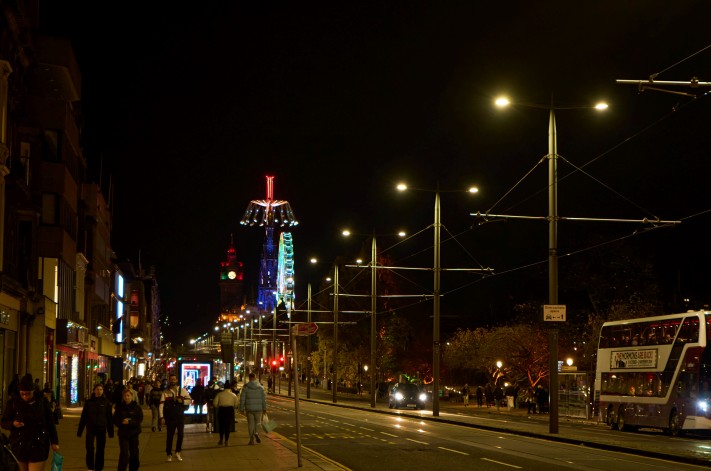
Hogmanay is the clearest case of demand outrunning the calendar. The Street Party is capped at 45,000 people, runs from 8 p.m. on 31 December to about 1 a.m., and organizers have released the following year’s early-bird tickets ahead of schedule precisely because people kept asking. In the most recent cycle, early-bird tickets started at £33, first release at £39 and final release at £45, with a £33 rate for EH-postcode residents and a £10 silent-disco add-on.
Both the Street Party and the Torchlight Procession sold out last cycle. The organizers are blunt about resale: valid tickets come only from edwinterfest.com, Ticketmaster and tickets-scotland.com, and anything on a secondary site is not valid. Treat the release date as a diary entry, not a maybe. If you miss it, the free consolation is Calton Hill for the fireworks view, and it is a good view.
Sydney: a ballot, not a queue
Sydney spreads its celebration across the harbour, and the free option is genuinely free. Darling Harbour runs shows at 9 p.m. and midnight with no ticket, first come, first served. The scarcity is everywhere else. North Sydney Council’s reserves at Blues Point, Cremorne Point, Bradfield Park and Lavender Bay go on sale on 7 October at $65 including GST, with capacities from about 3,000 to 8,500. The Cahill Expressway deck, one of the best positions on the harbour, is allocated by ballot, roughly 4,500 tickets per session for the 9 p.m. and midnight shows.
Waterfront hotels sell their parties on front-row views, and one recent general release sat at $650 per person with the first release gone. If the ballot fails and the reserves sell out, Darling Harbour still works. It just means standing.
Dubai: where I would actually pay for the view
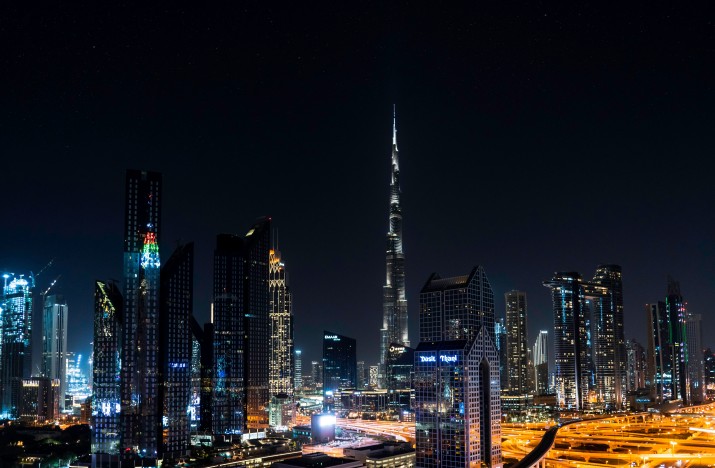
Dubai runs the biggest single-building show of the night around the Burj Khalifa, the 2,716-foot tower, and most of Downtown is free to watch from. The paid option is Burj Park, on the island in the Dubai Fountain lake. For the most recent edition it priced at AED 997.5 for adults, AED 577.5 for children aged 5 to 12, and free for under-fives with a mandatory badge. Doors opened at noon, final entry was 6 p.m., and badges had to be collected in person at Dubai Mall or Dubai Hills Mall between 26 and 30 December.
Dubai is the one destination here where I would consider the premium ticket rather than default to free. The free Downtown zones fill early and move slowly, while the paid park guarantees a sightline, food trucks and a toilet. If you can handle a packed street, the free version gives you the same sky for nothing. The premium zone was also produced with Red Chillies Entertainment, the company founded by Shah Rukh Khan, which tells you what kind of night it is.
The free parties that are not really free
Rio de Janeiro: the biggest party, and the easiest to plan badly
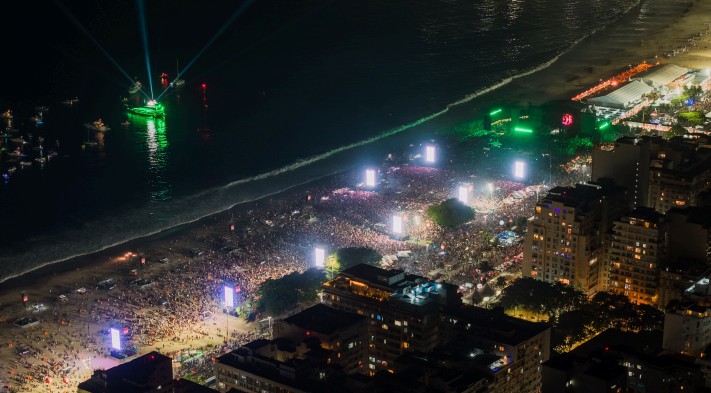
Rio’s Réveillon holds the Guinness World Records title for the largest New Year’s Eve celebration on earth. The most recent edition drew 2.6 million people to Copacabana alone and 5.1 million across 13 stages citywide, with a 12-minute fireworks show fired from 19 barges and a 1,200-drone display synced to it. All of that is free to attend.
The trap is accommodation. A beachfront room on Copacabana for this one night behaves nothing like a normal Rio booking, and the city’s own crowd estimates explain why. Book the room inside the 4 to 10 month window, and reserve any hotel dinner package the day it is announced. Wear white. Most of the crowd will.
New York: a free street and a very expensive chair
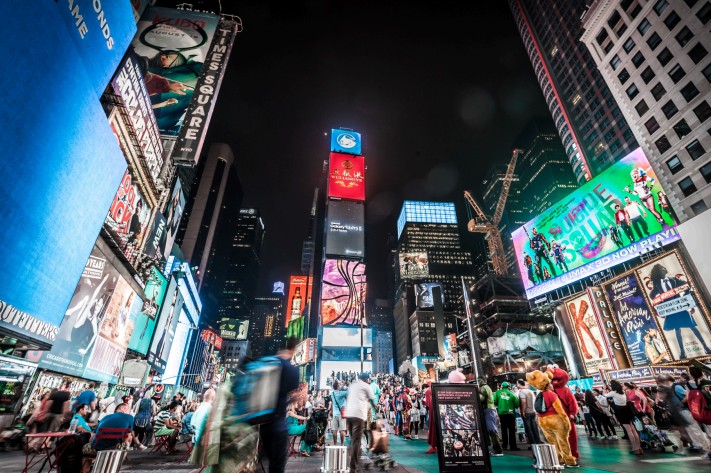
Times Square needs no ticket. Roughly one million people are expected to fill the area, with access points at 45th, 49th, 52nd and 56th Streets, and the best free sightlines along Broadway between 43rd and 50th. The ball has dropped since 1907. Arrive in the early afternoon, expect no re-entry, and accept that the toilet situation is what it is.
The paid alternative is a different night entirely. Rooftop and venue packages have run from about $39 for a basic standing package to $2,995 for a table, with most mid-range hotel parties between $550 and $1,500 per person. If comfort is the point, book the room with a view rather than the street spot. The room appreciates the same way a table does.
Tokyo: the New Year that feels like a place, not a party
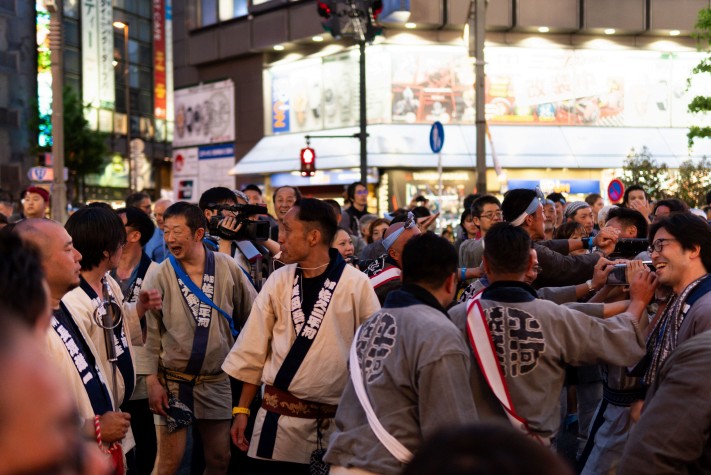
Tokyo does not do a citywide fireworks countdown, and that is the appeal. The night is Omisoka, and the ritual is joya no kane, the ringing of temple bells 108 times to clear the year’s earthly desires. At Zojoji, with Tokyo Tower lit behind it, you can book a turn at the bell for ¥1,000, rung between 7 p.m. and 8.30 p.m., and the temple releases balloons at midnight. Meiji Shrine draws around three million visitors over the first three days for hatsumode, the year’s first shrine visit.
If you want countdown energy instead, Shibuya’s scramble crossing becomes the street party, and the major train lines run all night so you can move between a countdown and a midnight shrine visit. Tokyo is the bet I would make if you want the holiday to feel like a place rather than a party. Book the hotel early; the shrines take care of themselves.
Reykjavik: the last genuinely free party
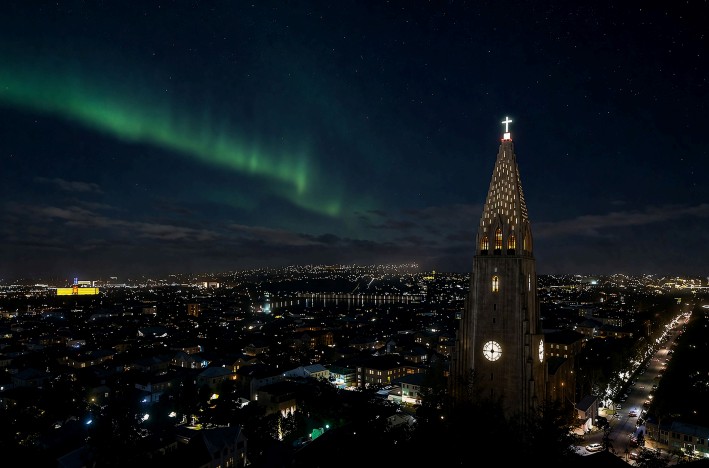
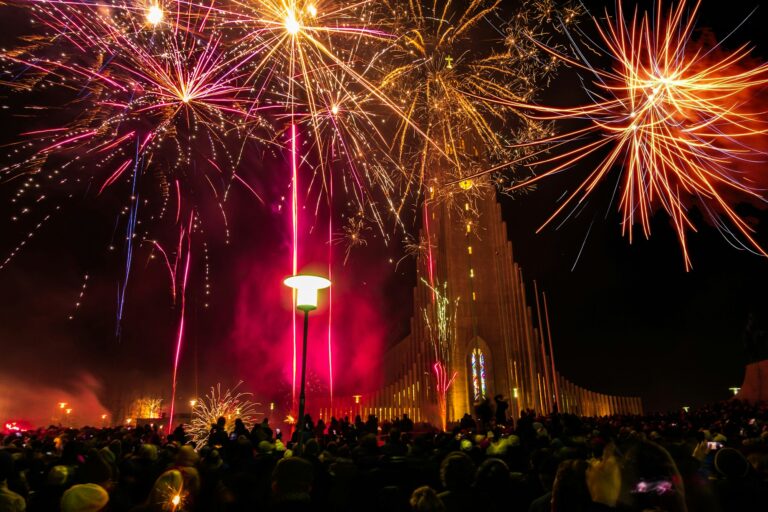
Iceland has no official municipal fireworks display. Instead, roughly the entire capital turns out and sets them off themselves, with many people gathering near Hallgrímskirkja to watch the city light up. The tradition has a second purpose. Fireworks are sold by ICE-SAR, the volunteer search and rescue service, and the sale is its biggest fundraiser each year. In the most recent season the sale generated up to ISK 800 million, about $5.7 million, covering 50 to 80 percent of the teams’ operating costs, and Icelanders buy more than 500 tonnes of fireworks in a legal window that runs from 28 December to 6 January.
One local custom deserves both a warning and a recommendation. At 10.30 p.m. roughly 90 percent of the country sits down to watch Áramótaskaup, a comedy review of the year. The city goes quiet, then extremely loud. “There are no official firework displays in the city,” Jónasson told Euronews. “This legendary night is very much created by the people.”
Berlin: the million-person party with no ticket to chase
Berlin stages its celebration between the Brandenburg Gate and the Victory Column, a free open-air event with live music, DJs, and laser and fireworks shows that draws a crowd in the seven figures.
There is no choke point to fight over, which makes Berlin one of the two real budget options on this list. The only thing that sells out is the ordinary city around it. Central hotel rooms for the weekend get tight even though the party itself costs nothing.
The wildcard: three Indian cities, one long weekend
India rarely makes these lists and should. A December trip there lines up with peak holiday season, the weather in the south is kind, and the metros run New Year celebrations with a scale and energy that surprise first-time visitors. Three cities are worth building the trip around.
Bengaluru: the pub capital
Bengaluru is routinely called India’s pub capital, and New Year is when the title earns itself. The action clusters around Indiranagar, Koramangala and the UB City complex, where hotels throw open-air parties with DJs, live Kannada music and midnight fireworks. Events sell out weeks ahead, so buy the pass before you buy the flight. If you would rather arrange company for the evening, a directory of Bangalore call girls is the usual starting point, and booking early matters here too, because the good agencies fill their calendars through December.
Kolkata: Park Street after dark
Kolkata does New Year with colonial-era elegance and a distinctly local twist. Park Street becomes the centre of gravity, strung with lights and given over to music, food stalls and crowds that build from evening until well past midnight. The city’s old clubs and hotels are the other draw. For travelers who want company rather than a group table, Kolkata escorts listings tend to cluster around the Park Street and Salt Lake hotel districts, which keeps logistics simple if you are already staying centrally.
Chennai: rooftops and the coast
Chennai is the quietest of the three and the easiest to do on a whim, though quiet is relative. Rooftop venues such as SkyLite and Above Sea Level sell the skyline and the countdown, while beachside restaurants like The Fisherman’s Wharf in Thoraipakkam lean into the sea air. Several venues advertise stag and single entry, unusual for India. For company on the night, a directory of Chennai call girls covers the main hotel and nightlife zones, and December availability goes fast.